Project info
- Case Studies
NAVFAC Marianas
H2O Guam JV – Healy Tibbitts Builders, Inc. in partnership with Hawaiian Dredging Construction Company and Obayashi Corporation
Moffatt & Nichol
Project Description
Apra Harbor Guam
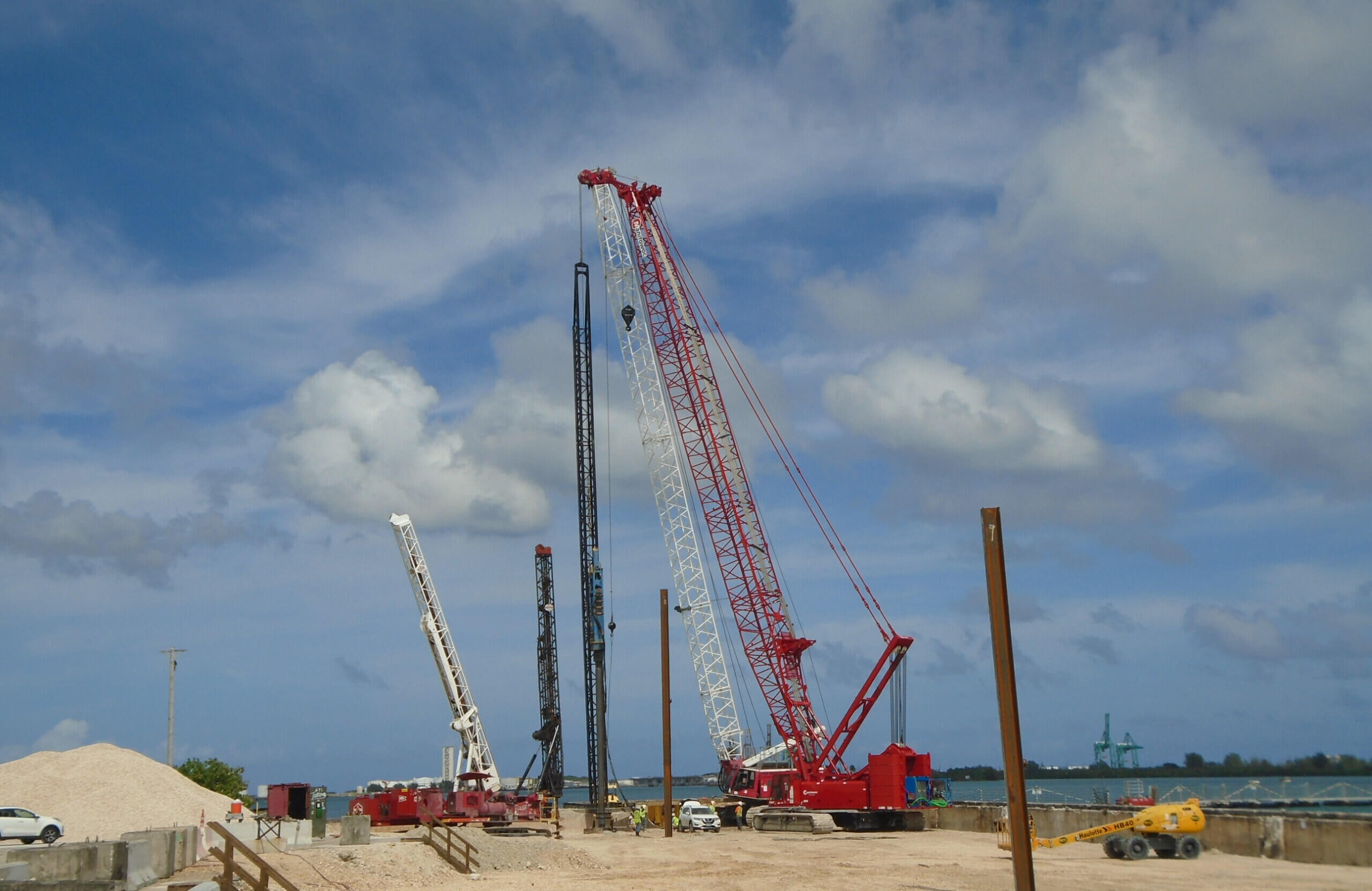
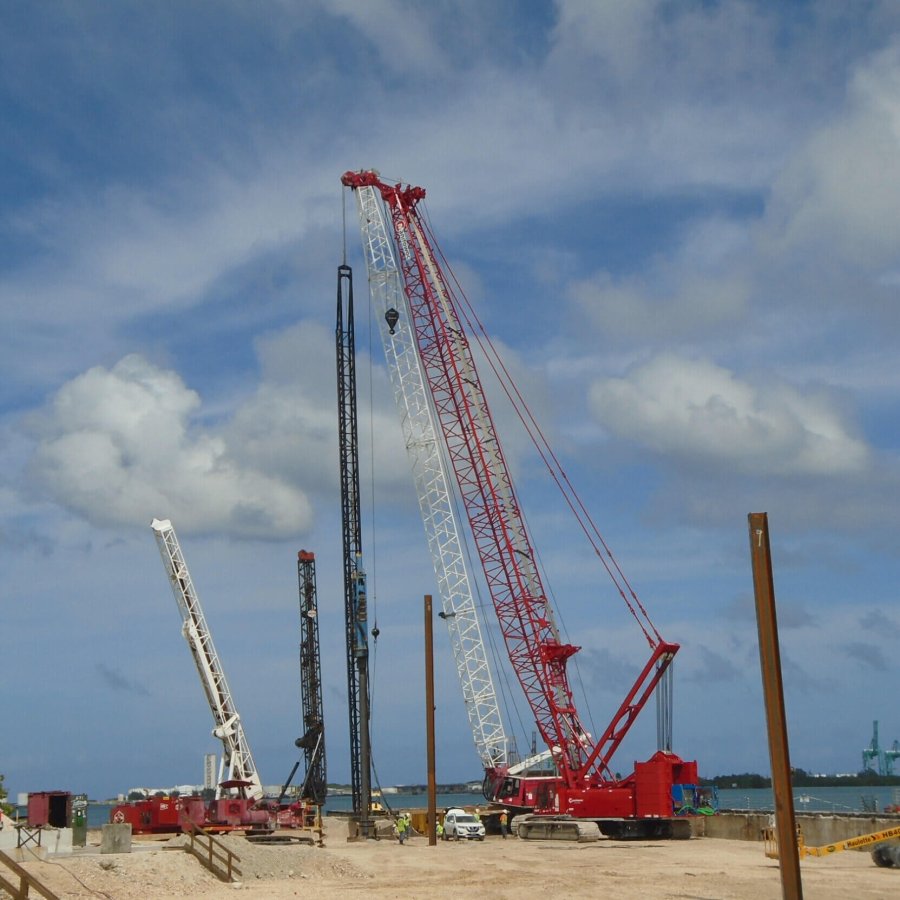
The Repair Lima Wharf project at Naval Base Guam restored and modernized the Navy’s longest and most important maintenance wharf in the Western Pacific. The $104.8 million project replaced a condemned facility with approximately 1,200 linear feet of modern berthing space capable of supporting the operation, maintenance and repair of large Navy vessels, including Military Sealift Command ships, submarines, amphibious readiness groups and carrier strike groups.
The project included demolition of the existing wharf and construction of a new steel king pile and sheet pile bulkhead system, reinforced concrete capping beam, pile-supported anchor wall and tie-back system, deep stone column ground improvement, heavy-weather mooring system and comprehensive fender system. Further work entailed new utilities, electrical infrastructure, lighting, pavement, cathodic protection and a Bilge and Oily Waste Treatment System. Additionally, key historic elements of the original wharf were preserved, including the portal crane rail.
Environmental stewardship was also integral to the project’s success. To protect the surrounding marine environment, the team implemented stringent safeguards for in-water work, including turbidity controls, marine mammal and turtle monitoring, water quality testing and compliance with seasonal coral spawning restrictions.
Throughout the project, the team faced extraordinary challenges, including the COVID-19 pandemic, global supply chain disruptions, limited skilled labor, significant differing site conditions and Typhoon Mawar, which caused widespread infrastructure damage across Guam and substantial impacts to workers and logistics. Dense coral rock also prevented piles from reaching planned elevations, requiring innovative technical solutions.
Beyond construction, the project created lasting benefits for the Guam community. The building team prioritized local hiring and workforce development, training Guam residents for high-skill marine construction roles while supporting local STEM education initiatives. Following Typhoon Mawar, the team also provided direct assistance to employees and their families, reinforcing its commitment to the community.
Despite complexities and significant challenges, the project was completed 95 days early while achieving exceptional safety, quality and environmental results through disciplined project management, strong partnering and innovative construction solutions.
Partnering Approach
Partnering was established at project initiation, with port operations and the design and construction team developing shared goals through a formal Project Collaboration Charter. Goals focused on safety, quality, schedule, budget, environmental compliance and maintaining port operations.
Bi-annual partnering sessions provided a structured forum to assess progress, address emerging risks and adapt strategies as conditions changed. Between sessions, partnering principles were integrated into daily project operations through “Play of the Day” meetings, three-week look-ahead schedule reviews, field observations, safety walks, environmental coordination and cost and change management reviews.
When major challenges emerged, the team shifted from planning to rapid-response problem solving. Technical working groups brought stakeholders together to evaluate alternatives, review testing and expedite decisions.
A tiered issue-resolution process allowed issues to be addressed at the lowest appropriate level before escalation. More complex matters were elevated to project or senior leadership, while partnering sessions addressed recurring or systemic issues, reinforced a “no surprises” culture and helped mitigate the need for formal dispute resolution.
The approach produced tangible results. When dense coral rock prevented driven anchor wall piles from reaching design elevations, the team collaboratively evaluated alternatives and validated a concrete-filled drilled shaft system with embedded H-piles. The approved solution exceeded performance requirements and was later adopted for adjacent wharf projects.
The team also used collaborative cost and change management to address differing site conditions under a firm-fixed-price repair contract with no contingency. Strategic descoping and value-focused decision-making helped limit cost growth while maintaining the project schedule and critical mission requirements.
Through a concerted partnering effort, the Repair Lima Wharf project stands as a model of excellence in federal heavy civil construction — delivering critical infrastructure under extraordinary conditions while achieving outstanding results for all stakeholders.
Partnering Results
- Completed 95 days early
- Established cost control measures to limit budget growth
- Zero lost time safety incidents, over 537,000 work hours
- “Exceptional” NAVFAC ratings across all performance categories
- No unresolved claims
- Maintained environmental stewardship in a sensitive marine setting
- Improved communication
- Fostered Innovation to resolve project complexities
- Built trust and a positive team environment
Project Notes
- Project Cost: $104.8 million
- Size: 1,200 linear feet of modern berthing space
- Delivery Method: Design-Bid-Build, Firm Fixed Price
- Construction Start: January 5, 2021
- Completion: March 28, 2025
Awards
International Partnering Institute 2026 John L. Martin Partnered Project of the Year