Project info
- Case Studies
Kansas City Streetcar Authority
City of Kansas CityThe KC Streetcar Constructors—a partnership of Herzog Contracting Corp. and Stacy and Witbeck—led construction, supported by Burns & McDonnell and JE Dunn Construction
HDR
Project Description
Kansas City, Missouri
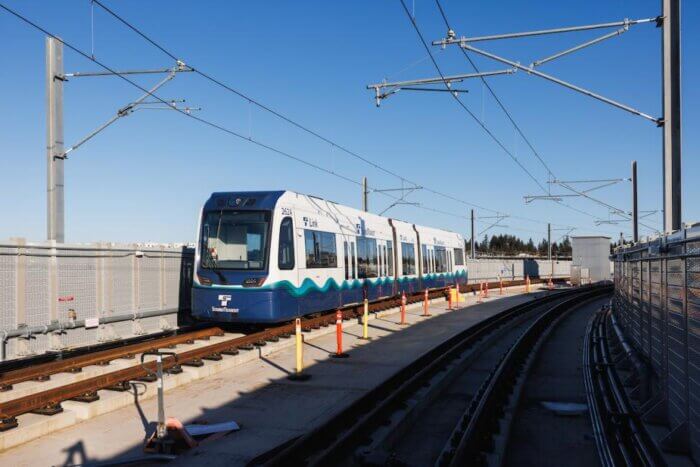
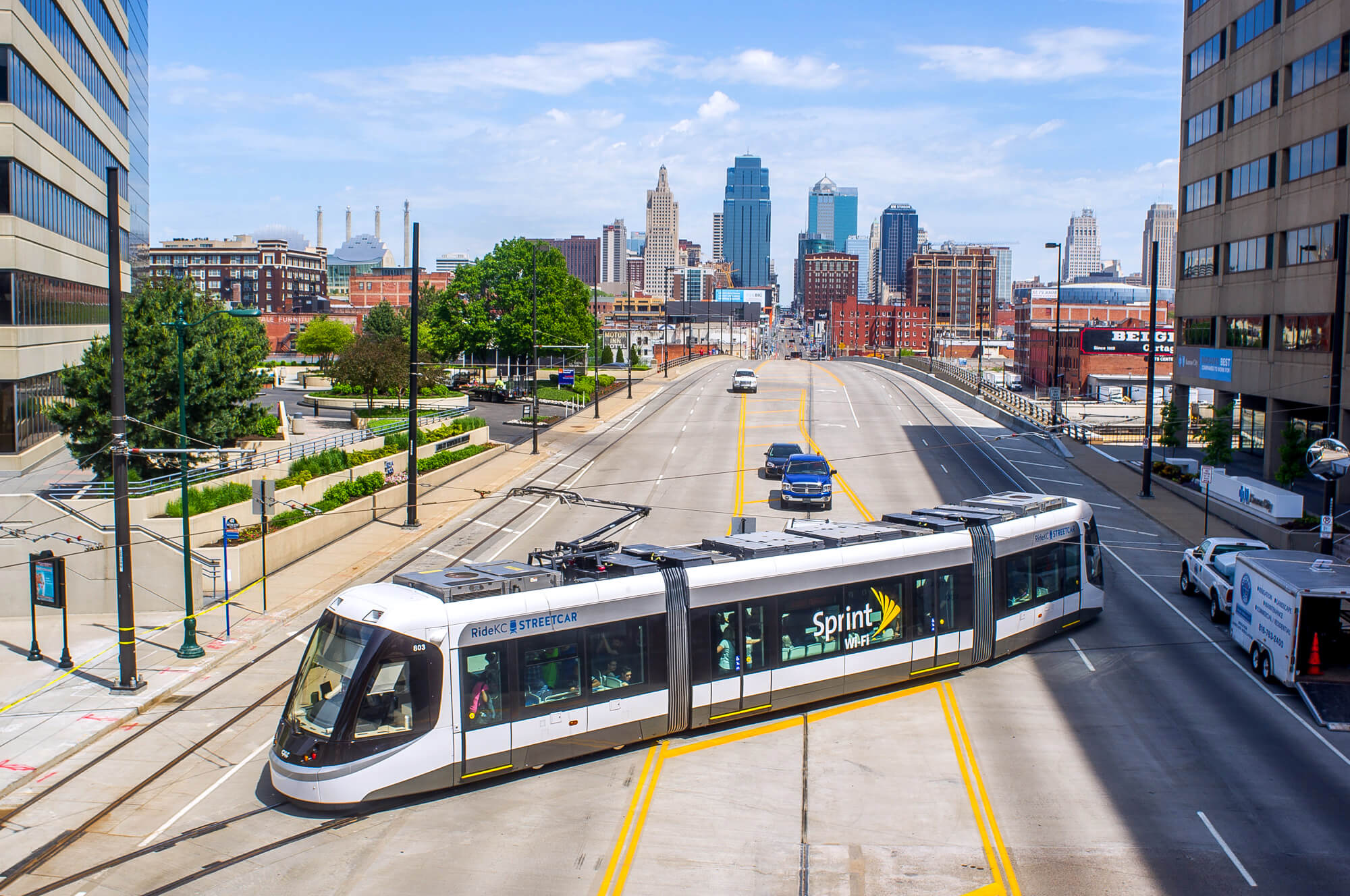
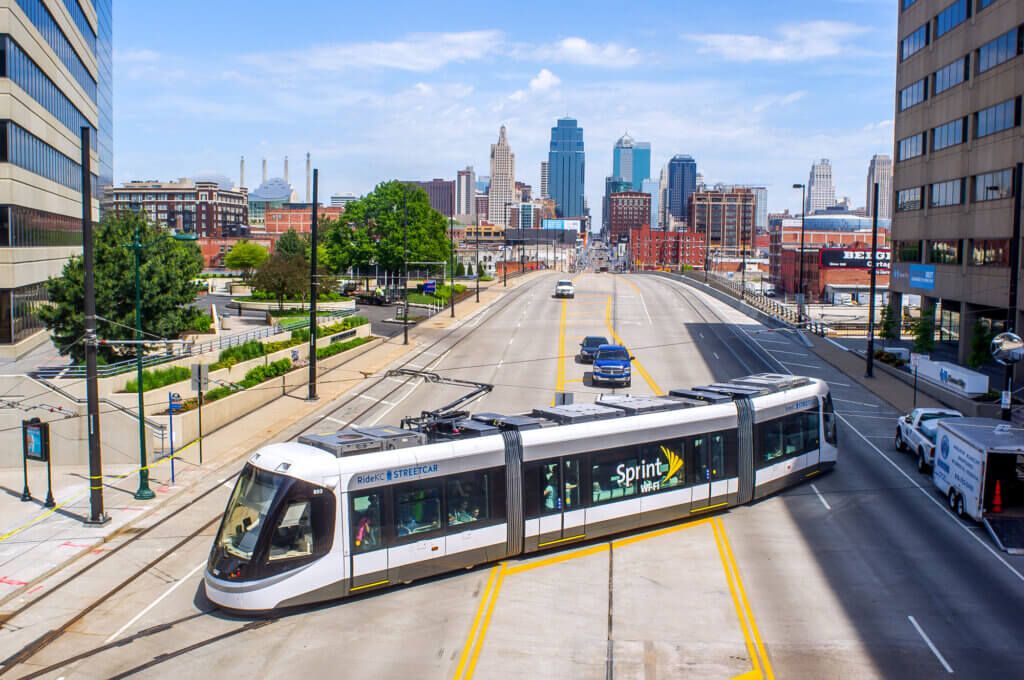
Built on a foundation of collaboration and shared purpose, the Kansas City Streetcar Authority’s Main Street Extension is a transformative transportation project that strengthens connectivity across the city’s urban core. Delivered through a Construction Manager at Risk (CMAR) model, the southern extension expands the original streetcar line south from Union Station to the University of Missouri, Kansas City (UMKC), creating a nearly six-mile, fare-free transit spine from the River Market to Midtown and Brookside.
As one of the largest transportation investments in Kansas City’s history, the $352-million project included 3.5 miles of double-track, curb-running streetcar alignment along with 15 new station stops, improving access for residents, workers, students and visitors. Eight new streetcar vehicles were added to the fleet, supported by significant upgrades to the Vehicle Maintenance Facility, including new track, storage and operational systems.
Construction integrated complex streetcar infrastructure into an active, multimodal urban environment, while also prioritizing public space and streetscape enhancements such as new sidewalks, crosswalks, ADA ramps, curbs, lighting, landscaping and pedestrian plazas, improving safety and walkability throughout the corridor. Through extensive coordination and collaboration, electrical systems, substations, overhead catenary infrastructure, drainage, signaling, and communications were seamlessly tied into the existing streetcar network.
Completed on time and under budget, the Main Street Extension showcases the dedication and collaboration of the project team in delivering a complex infrastructure project that supports sustainable, zero-emission transit and a more connected, vibrant future for the people of Kansas City.
Partnering Approach
To align a diverse group of stakeholders and support the successful delivery of this complex, high-profile project, the project team implemented a formal construction partnering program facilitated by VELO Group. Partnering began with a kick-off session and continued through eight formally facilitated sessions, including a final partnering review. Participants comprised representatives from the owner agencies: City of Kansas City, KC Streetcar Authority, Kansas City Area Transportation Authority; the CMAR contractor and joint venture partners; major subcontractors; and key consultants.
During the initial session, the team established shared stretch-goals tied to safety, schedule, budget, quality, communication and issue resolution. These goals were revisited, evaluated, and refined at each partnering session to reflect project progress and emerging challenges. The team also defined what extraordinary success would look like — finishing on time and on budget, minimizing impacts to existing operations, maintaining strong public perception, achieving early commissioning, avoiding unresolved claims, and completing the project with a desire to work together again.
An issue resolution matrix was developed and reinforced as a best practice, emphasizing resolution at the lowest possible level before escalation. Between sessions, 19 partnering surveys were conducted to measure performance against the common goals and teamwork behaviors such as communication, decision velocity, risk management, and continuous improvement. Scores were reviewed openly, and areas needing attention were addressed, resulting in measurable improvement over time. At each session, the team selected a Partnering Champion to recognize individual contributions while reinforcing accountability and sustaining a collaborative, project-first culture throughout delivery.
Partnering Results
- Completed on time and under budget
- Maintained stringent quality standards
- Zero unresolved claims at project closeout
- Accelerated issue resolution and decision-making
- Mitigated safety risks for workers and the public
- Successfully integrated new infrastructure into an active transit system
- Fostered innovation and creative problem-solving
- Achieved early commissioning and minimized impacts to existing operations
- Improved communication, trust, and teamwork across all stakeholders
- Garnered positive media coverage and strengthened community outreach
Project Notes
- Project Cost: $352 million
- Size: 3.5-mile extension, 15 stations
- Delivery Method: CMAR
- Groundbreaking: April 2022
- Opening: October 2025