Project Description
San Luis Obispo, California
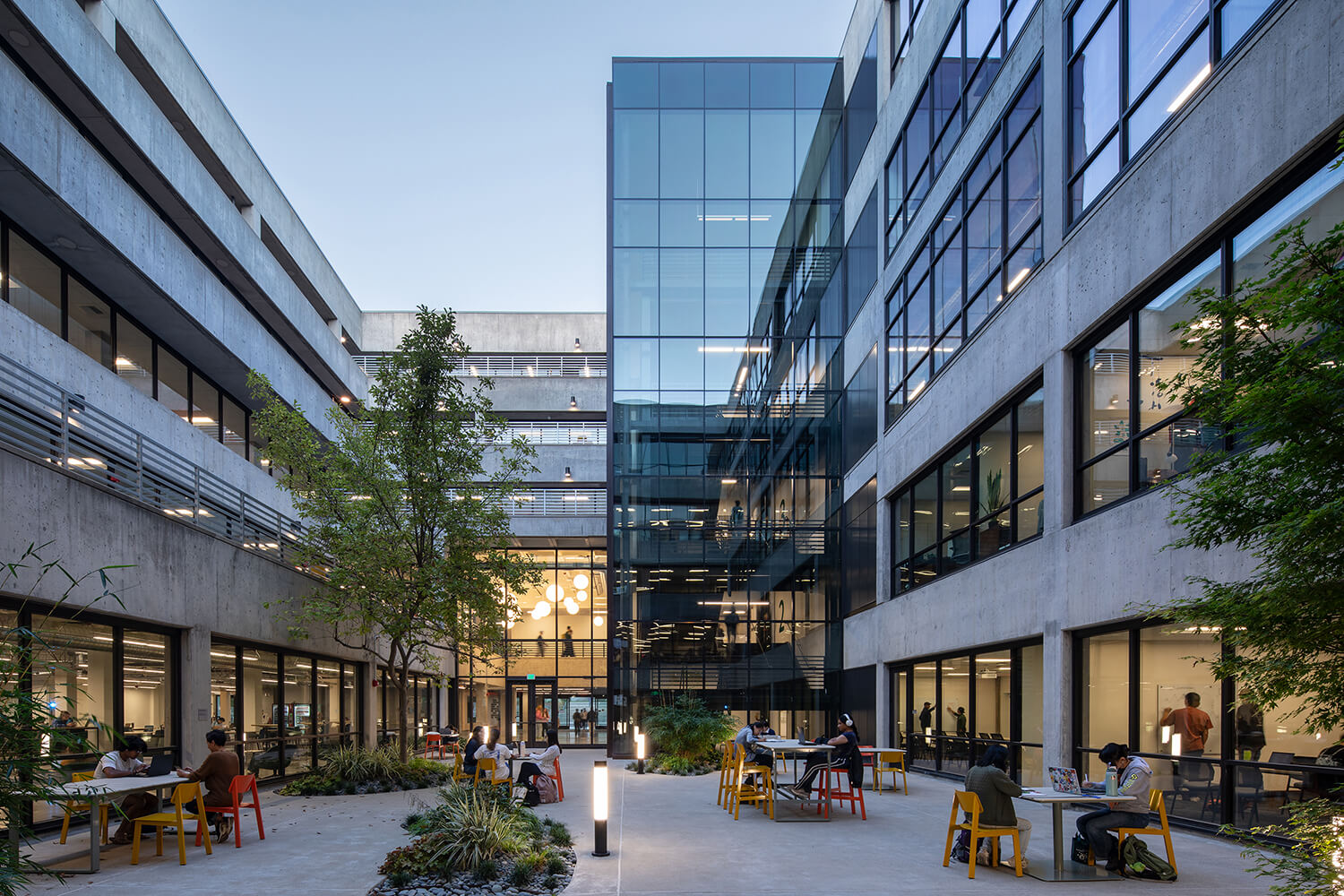
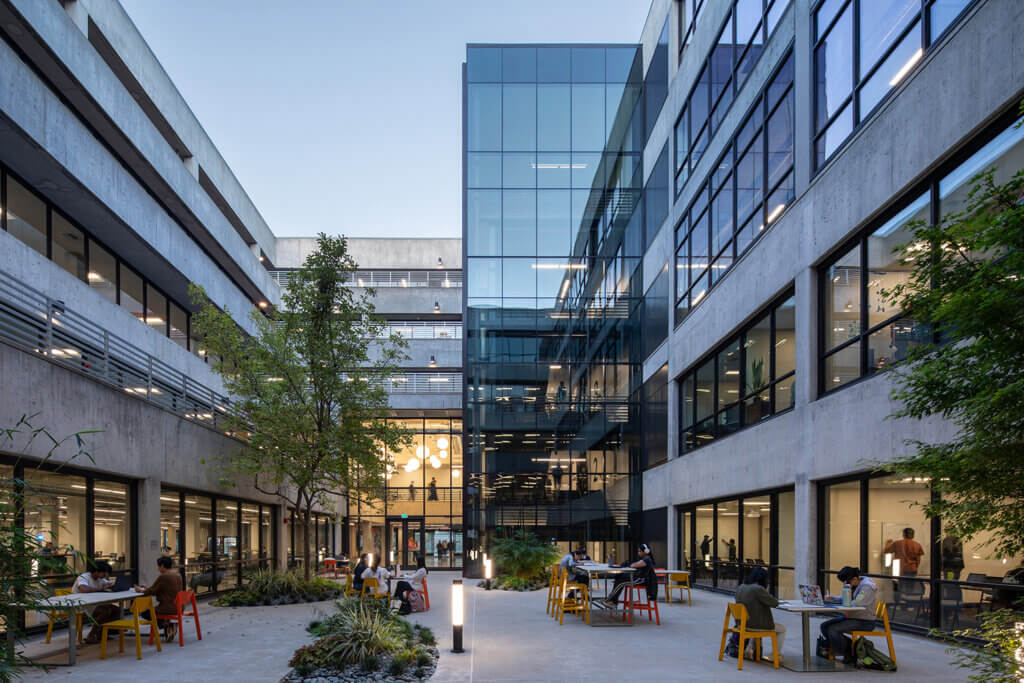
Built to update aging infrastructure and evolving academic needs, The Cal Poly Kennedy Library Transformation Project included renovation and modernization of a 200,000-square-foot, five-story brutalist structure originally built between 1977 and 1980. After two years of construction, the library has been reimagined into what campus leaders describe as the “living room” of Cal Poly — a space where students gather to focus, collaborate and recharge.
The redesign responds to the shift toward digital resources by prioritizing people over library collections and bringing together teaching, research and student support services under one roof. A more open, light-filled layout with reconfigured entrances, an accessible atrium, and intuitive circulation improves how users navigate and experience the space. Expanded seating, flexible furniture and collaborative zones support a wide range of learning styles.
Significant infrastructure upgrades addressed decades of deferred improvements, including seismic reinforcements, a new roof, modern HVAC systems, fire life safety upgrades, LED lighting, and high-performance glazing. These enhancements improve comfort and safety while reducing energy use by 30 percent and supporting LEED Gold certification.
Partnering Approach
As Cal Poly’s first progressive design-build project and a pilot for the California State University (CSU) system, the team established a One Team philosophy from day one, using partnering, open communication, and technology to drive alignment, build trust and support effective decision-making.
Facilitated by VELO Group, eight partnering sessions were held throughout the project, beginning with a kickoff that united university stakeholders, the CSU system, and the design-build team. This session established alignment on objectives, communication protocols, and issue resolution, setting a clear path to deliver an accelerated schedule, seamless user transition, disciplined cost management, and a transformative, campus-centered design.
Through structured collaboration, Cal Poly leadership remained actively engaged in design discussions, providing continuous feedback across all project phases. Teams organized by building systems, such as mechanical, electrical, plumbing, and technology, helped designers, trade partners, and reviewers efficiently collaborate and create practical solutions in real time. Monthly Project Executive Committee meetings provided a forum to resolve escalated decisions related to cost, scope, and schedule, ensuring transparency and maintaining project momentum.
These practices proved critical as the team navigated a fixed budget, pandemic-related cost escalation, and the complexity of renovating an occupied campus facility while aligning 17 stakeholder groups. Even during remote work necessitated by the pandemic, online meetings replicated the benefits of a traditional big room environment, maintaining communication, collaboration, and trust.
Through this holistic partnering approach, the project was completed safely, ahead of schedule and within budget, resulting in a modern, inclusive library and vibrant community space that will support the evolving needs of the Cal Poly campus for generations to come.
Partnering Results
- Completed 125 workdays early, minimizing campus disruption
- Achieved temporary occupancy four weeks ahead of schedule
- Delivered on budget with $850,000 glazing and $2.5 million in furniture reuse savings
- Reinvested over $1 million into added value scope
- Saved approximately $4 million due to partnering efforts
- Completed 77,629 labor hours with zero lost time safety incidents
- Achieved LEED Gold Certification
- Exceeded quality and inspection benchmarks
- Delivered a seamless user transition and reopening
- Strengthened collaboration across 17 stakeholder groups
- Generated positive media and campus engagement
Project Notes
- Project Cost: $79.25 million
- Size/Square Footage: 200,000 square feet
- Delivery Method: Progressive Design Build
- Project Start: January 2022
- Project Completion: August 2025
- Opening: September 2025
Awards
International Partnering Institute John Martin Project of the Year Award – 2026